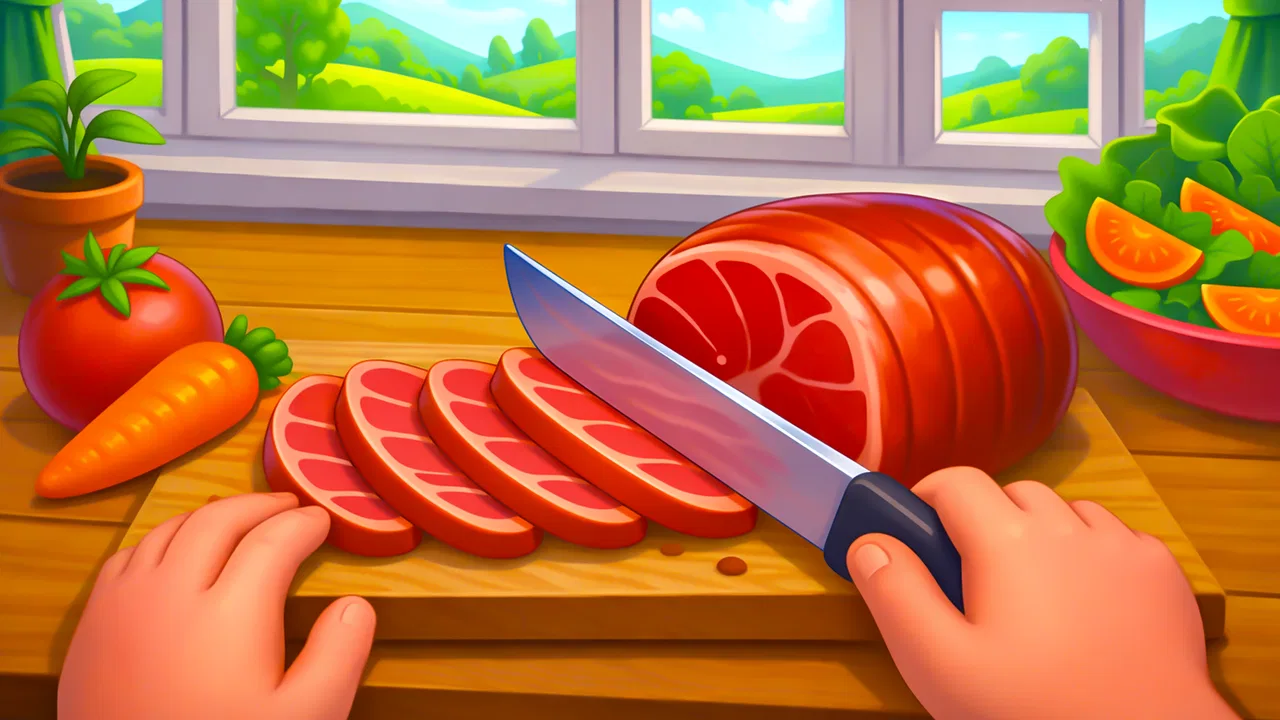
Cooking Blast: Restaurant Game
- 4.8
- Rating
- 1.00M
- Installs
- Free
- Price

 Analysis by App-foxy
Cooking Blast: Restaurant Game is the kind of arcade game I can understand immediately: prepare food, serve customers, and move through kitchen-themed challenges without needing a long tutorial. I found its appeal strongest during short sessions, when I wanted something light and active rather than a deep simulation. The central idea is familiar, but the presentation gives it an approachable rhythm that makes the first few plays easy to enjoy.
That first impression matters because cooking games can become repetitive quickly. In my experience, this one works best when I treat it as a quick break rather than a full restaurant-management replacement. It is free to start, suitable for Everyone, and developed by Tremex Games. Those details make it easy to recommend to families, casual players, and anyone looking for a simple arcade game that can be picked up without preparation.
What the first week feels like
The opening appeal comes from the combination of familiar food-service actions and constant small decisions. I am not sitting back and watching a restaurant grow; I am paying attention to orders, timing, and the next task in front of me. That hands-on quality is what separates the experience from a passive time-killer. Even when a session lasts only a few minutes, there is usually a clear reason to keep going: finish the current challenge, improve the flow, or see what the next kitchen brings.
You May Also Like

 Blood Strike: 2.5 Anniversary
Blood Strike’s Loadouts Turn Every Drop Into a Tactical Gamble
A close look at Blood Strike’s custom loadouts: how fast access to signature weapons reshapes its battle royale rhythm, rewards preparation, and narrows the gap between fights.

 Pandora - Music & Podcasts
Pandora’s Music Is Easy to Start, but Harder to Recover
Pandora’s strength is its low-effort path from a seed to a station. Its weak spot is how much confidence it asks you to place in connection, setup, and quiet recovery.

 8 Ball Pool
 Is Built on Rivalries, Rematches, and Routine
A close look at the rivalries, rematches, shared routines, and unanswered safety questions that turn a quick pool match into a persistent mobile community.

 Samsung Music
’s Quiet Strength Is Playing What You Already Own
Its reach comes less from spectacle than from dependable access to a personal library. That simplicity is both the app’s strongest retention engine and its ceiling.

 AccuWeather: Weather Radar
AccuWeather Review: A Quick, Clear Forecast for Everyday Decisions
For everyday plans, the best forecast is the one you can understand quickly. AccuWeather makes rain timing, radar, and local conditions easy to act on, with a few trade-offs.

 Hill Climb Racing
Why Hill Climb Racing Still Turns Crashes Into One More Run
A tiny car, a bumpy hill and one more upgrade: Hill Climb Racing keeps resurfacing because its simple chaos makes every near-miss feel personal.
More From Our News Desk



I also like that the concept is readable for younger players. The Everyone age rating fits the cheerful, uncomplicated direction, while adults can still enjoy the quick pace when they do not want a complicated strategy game. It is a good candidate for a shared device, although younger children may still need guidance around optional purchases. The game is free, but in-app items range from $1.49 to $99.99 each, so I would review purchase settings before handing a phone or tablet to a child.
During an ordinary commute or a short wait at an appointment, the game has a useful advantage: it does not demand the kind of commitment associated with a long role-playing game. I can play a little, put it down, and return later without feeling that I have abandoned a complicated plan. That makes it more practical than many alternatives that depend on extended sessions or detailed resource management.
My most useful early tip is to avoid playing every round at maximum speed. Cooking games often tempt me to tap as quickly as possible, but a steadier routine helps me notice which action is actually slowing the kitchen down. I found that concentrating on the order sequence, instead of reacting to every customer separately, makes the play feel less frantic. This is a small habit, but it also reveals whether I enjoy the game’s core loop or merely the novelty of its first stages.
Why the early loop is easy to understand
The restaurant setting gives each task an obvious context. Serving food has a visible purpose, and kitchen progress feels more intuitive than abstract score chasing. That clarity is especially helpful for players who are new to arcade games. I do not need to learn a large set of rules before deciding whether the game suits me.
At the same time, the simplicity can work against it. Players who want a detailed cooking simulator, ingredient planning, or a serious business-management layer may find the experience too focused on immediate action. I would choose a dedicated simulation game instead if my goal were to design menus, control staffing, or build a restaurant economy. Cooking Blast is better understood as an arcade interpretation of restaurant work, not a realistic culinary management tool.
The current version is 0.0.99, and that number is worth keeping in mind when setting expectations. I approached it as an evolving game rather than a finished, feature-heavy package. That does not prevent it from being enjoyable, but it does make the long-term question more important: once the initial discovery is over, does the routine remain satisfying?
Where the lasting value comes from
The answer depends heavily on what I want from a mobile game. If I value short bursts, repeated practice, and the satisfaction of becoming more efficient, the restaurant loop has a reasonable chance of staying useful. If I need a large amount of story, constant surprise, or a deep collection system, the appeal is less secure. The game’s strongest recurring value is not complexity; it is the ability to turn a simple sequence of kitchen tasks into a compact concentration exercise.
That makes it a good fit for a few specific habits. I can use it as a reset between demanding tasks, as a casual game for a family member who does not want complicated controls, or as a way to fill a short period when reading or watching a full program feels excessive. The best sessions are intentional: I open it for a small break, play until I feel satisfied, and stop before the repetition becomes tiring.
It also rewards a modest form of self-improvement. Instead of asking only whether I completed a round, I can pay attention to where I hesitate. Do I lose time by switching attention too often? Do I rush one order and create a backlog? Do I focus on the most visible customer while ignoring the sequence that would keep the whole kitchen moving? Looking at those questions gives the arcade loop more depth than the store summary suggests, even though the underlying actions remain straightforward.
The most important long-term test is whether the routine improves your play without becoming a chore. I would give the game several short sessions before deciding. A player who enjoys refining timing may discover a comfortable daily habit, while a player who needs frequent new mechanics may reach the limit sooner.
How it compares with familiar alternatives
Compared with a traditional time-management restaurant game, this title feels more accessible because I can focus on serving and kitchen action without first learning a large business system. That is an advantage when I want immediate play. The trade-off is that players who enjoy planning upgrades, balancing costs, or shaping a restaurant’s identity may find a deeper management alternative more rewarding over time.
Compared with a pure reflex arcade game, the cooking theme gives my actions more meaning. I am not simply chasing movement or matching colors; I am trying to keep a service routine under control. However, someone looking for competitive score attacks or highly demanding reaction tests may prefer a specialized arcade game with a sharper challenge curve.
It also differs from relaxing cooking apps that emphasize decoration or creativity. Here, I would approach the experience for active service rather than quiet customization. If I want to experiment freely with recipes or build a visually personal restaurant, another type of game would be a better match. If I want quick decisions with a recognizable food-service frame, this one makes more sense.
What can make repeated play tiring
The main risk is repetition. Serving food is immediately understandable, but that also means the basic idea can lose its surprise. Once I have learned the rhythm of a kitchen, a new round may feel like another version of a task I already know. The game is most enjoyable when I am still learning to organize my actions; it is less compelling when I am completing the same routine automatically.
Another source of fatigue is the difference between a short session and an overly long one. I would not recommend forcing myself to keep playing after the loop stops feeling responsive. The game works better as a series of compact visits than as a marathon. That is not a flaw for a casual arcade title, but it does limit its value for players who want one game to occupy an entire evening.
Optional purchases can also affect the feeling of progress. Because individual items can cost from $1.49 to $99.99, I would decide in advance whether I am comfortable spending anything. Playing for free is the clearest way to judge the game’s natural pacing. Buying something too early can make it harder to tell whether I enjoy the gameplay or simply enjoy removing friction.
My practical approach is to keep purchases separate from the decision to continue playing. First, I would see whether the core kitchen routine remains enjoyable after the introductory excitement. Only then would I consider whether an optional item adds enough convenience or enjoyment to justify its cost. For many casual players, spending nothing will be the sensible choice.
Maintenance and everyday use
The maintenance burden is fairly low from a player’s point of view. I do not need to plan a complicated schedule or remember a large number of systems to get value from a session. The main maintenance is personal: managing attention, resisting unnecessary spending, and deciding how often to return so the game stays refreshing rather than repetitive.
That makes it suitable for people who want a game that can sit on a phone without demanding constant commitment. I can leave it alone for a while and come back when I want a quick arcade break. The important exception is anyone who dislikes games built around repeated service actions. For that player, low maintenance will not solve the deeper issue that the central activity may not provide enough variety.
Device compatibility is also relatively broad, with a minimum operating system of Android 7.0. I would still think about the practical context: a smaller screen may make busy kitchen actions feel more cramped, while a tablet can make the visual flow easier to follow. I would not choose the game solely because it runs on an older Android version, but that compatibility can help people using a less recent device.
The game has reached over one million installs and holds a 4.8 average from around ten thousand ratings, with more than three hundred written reviews. Those figures suggest that the basic concept connects with a substantial casual audience, but they do not guarantee that it will suit every player. I see them as a reason to try it, not as a substitute for asking whether repeated restaurant tasks are the kind of play I actually enjoy.
Who should make room for it
I would recommend Cooking Blast: Restaurant Game to someone who likes accessible arcade games, food-service themes, and short sessions with visible objectives. It is particularly appealing if you enjoy improving a routine through better timing rather than learning complicated systems. Families may also appreciate the clear premise and Everyone rating, provided purchase controls are handled responsibly.
I would be more cautious about recommending it to players who need a strong narrative, realistic cooking, extensive customization, or a deep economy. It is also not my first choice for someone who becomes frustrated by repetition or wants a game that constantly introduces new forms of play. In those cases, a dedicated simulation, puzzle game, or more varied arcade title would probably earn more lasting attention.
The release date of January 24, 2026, and the 0.0.99 version position the game as a relatively early experience in its life. I would therefore judge it by the pleasure of its current loop rather than by expecting a fully developed long-term ecosystem. Tremex Games has built a clear starting point, but the question for me is whether future play continues to feel active instead of merely familiar.
After the novelty fades, I can imagine keeping it installed if I use mobile games as brief mental breaks. It has enough immediacy to justify returning now and then, and its restaurant theme gives the tapping and timing a pleasant sense of purpose. I would not make it my only arcade game, though. Keeping a second option with a different structure would help prevent the kitchen routine from becoming stale.
My final view is positive but measured. Cooking Blast: Restaurant Game earns lasting space when you enjoy compact, repeatable kitchen challenges and are comfortable treating it as a casual habit. It does not replace a full cooking simulator or a richer management game, and its recurring value depends on how much satisfaction you get from refining familiar actions. For me, that makes it worth trying for free, playing in short sessions, and judging honestly after the first week rather than assuming the early excitement will last forever.
FAQs for Cooking Blast: Restaurant Game
01What is Cooking Blast: Restaurant Game?
Cooking Blast: Restaurant Game is a time-management cooking game in which you prepare dishes, serve customers, and work to improve your restaurants. Players typically progress through different levels by completing orders quickly and accurately, earning rewards, and unlocking new recipes, kitchen equipment, or locations. It is designed for casual play, but later stages can become more challenging as customer patience and order complexity increase.
02How does the gameplay work?
The core gameplay revolves around preparing ingredients, cooking meals, and serving them before customers become impatient. Each level usually gives you specific goals, such as serving a certain number of dishes, earning enough coins, or completing orders within a time limit. Success depends on tapping efficiently, prioritizing urgent orders, and upgrading useful kitchen tools rather than simply serving items as quickly as possible.
03Can Cooking Blast: Restaurant Game be played offline?
Some parts of Cooking Blast: Restaurant Game may be available without a constant internet connection, especially basic cooking levels that have already been loaded. However, an internet connection may be required for advertisements, cloud saving, special events, rewards, updates, or in-app purchases. If offline access is important to you, it is best to test the game in airplane mode after installation, since availability can vary by device and app version.
04Does the game contain ads or in-app purchases?
Cooking Blast: Restaurant Game may include optional in-app purchases and advertisements, as is common with free-to-download cooking and time-management games. Ads can sometimes provide extra rewards, additional lives, or bonus coins, while purchases may help players obtain currency, boosters, or remove waiting periods. You can usually progress without spending money, although later levels may require more patience or repeated attempts.
05Is Cooking Blast: Restaurant Game suitable for children?
The game is generally easy to understand and features colorful restaurant-themed gameplay that may appeal to children and families. Nevertheless, parents should review the age rating, advertising content, privacy information, and available purchase options before allowing a child to play. Because the game may encourage watching ads or buying virtual items, parental controls and purchase restrictions are recommended on shared mobile devices.
Pros
- Quick levels make it easy to play during short breaks.
- Unlocking restaurants adds a satisfying sense of progression.
- Colorful food designs make the game visually appealing.
- Simple controls are suitable for players of most ages.
- Special boosters help clear difficult cooking challenges.
Cons
- Later levels can become noticeably more difficult.
- Energy limits may interrupt longer play sessions.
- Some upgrades require patience or premium currency.
- Repeated level objectives may feel less varied over time.
- Ads can appear frequently between certain gameplay moments.

Cooking Blast: Restaurant Game
Gallery